
What should you pack for Australia and New Zealand?
What exactly you need to bring to Australia or New Zealand depends on your travel period, route and activities. However, there are a number of items that come in handy during virtually every road trip. Pack practically and don't bring too much. With a Campervan trip, limited luggage is also easier to store.
Important documents
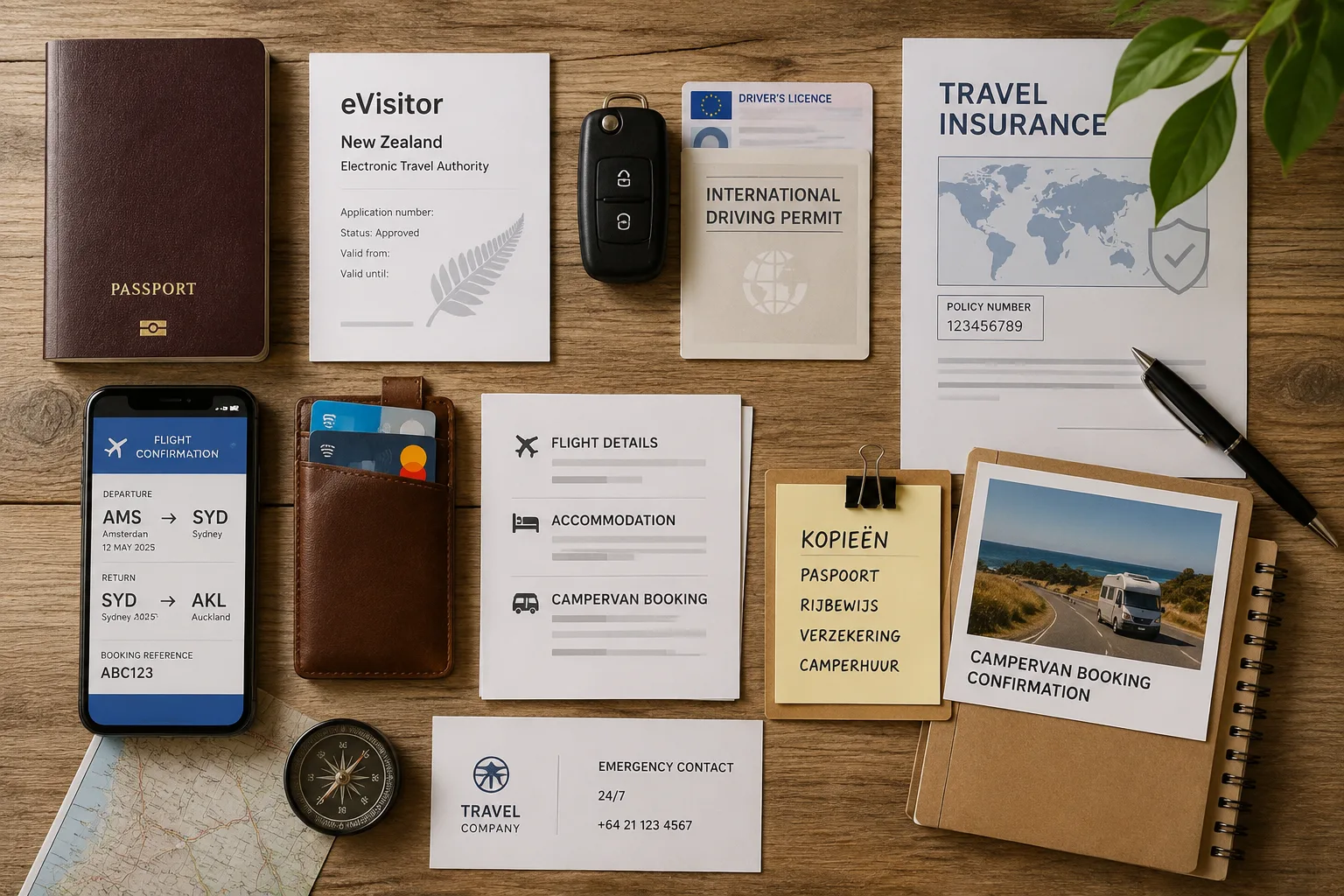
Make sure you have the most important documents with you both digitally and on paper:
- valid passport
- visa or digital travel authorisation
- driving licence and possibly an international driving licence
- travel insurance and policy number
- flight details and reservations
- debit card and credit card
- copies of important documents
- confirmation of your Campervan hire
- details of your Campervan hire company and emergency contacts
Check in advance whether your travel insurance also covers planned activities, such as diving, mountain hiking, rafting or other adventurous excursions.
Clothing for changeable weather
Both Australia and New Zealand experience significant variations in temperature and weather conditions. Therefore, work with layers. This way you can easily adjust your clothing.
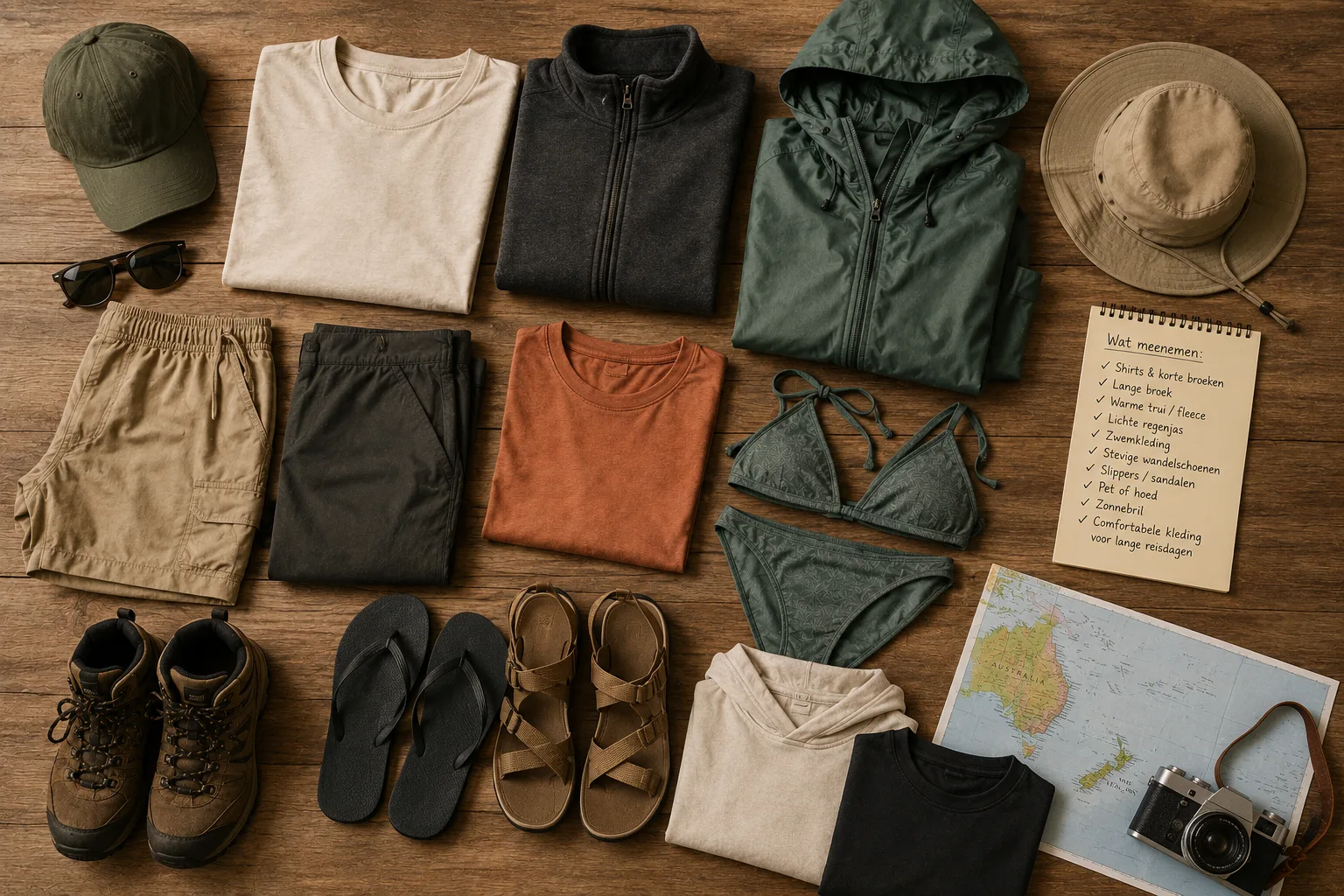
Make sure you pack:
- comfortable shirts and shorts
- long trousers and a warm jumper or fleece
- a light rain jacket
- swimwear
- sturdy walking shoes
- flip-flops or sandals
- a cap or hat
- sunglasses
- comfortable clothing for longer travel days
Even when travelling in summer, the evenings can be cool. Especially in southern Australia, Tasmania and New Zealand's South Island, the weather can change quickly.
Protection from sun and insects
The sun's strength can be very high in both countries. Good sun protection is therefore essential:
- sunscreen with a high protection factor
- sunglasses with UV protection
- hat or cap
- reusable water bottle
- insect repellent
- aftersun if needed
Travelling to tropical Northern Australia or spending a lot of time near rivers, forests and lakes? Then definitely bring plenty of insect repellent.
Handy items for a Campervan trip
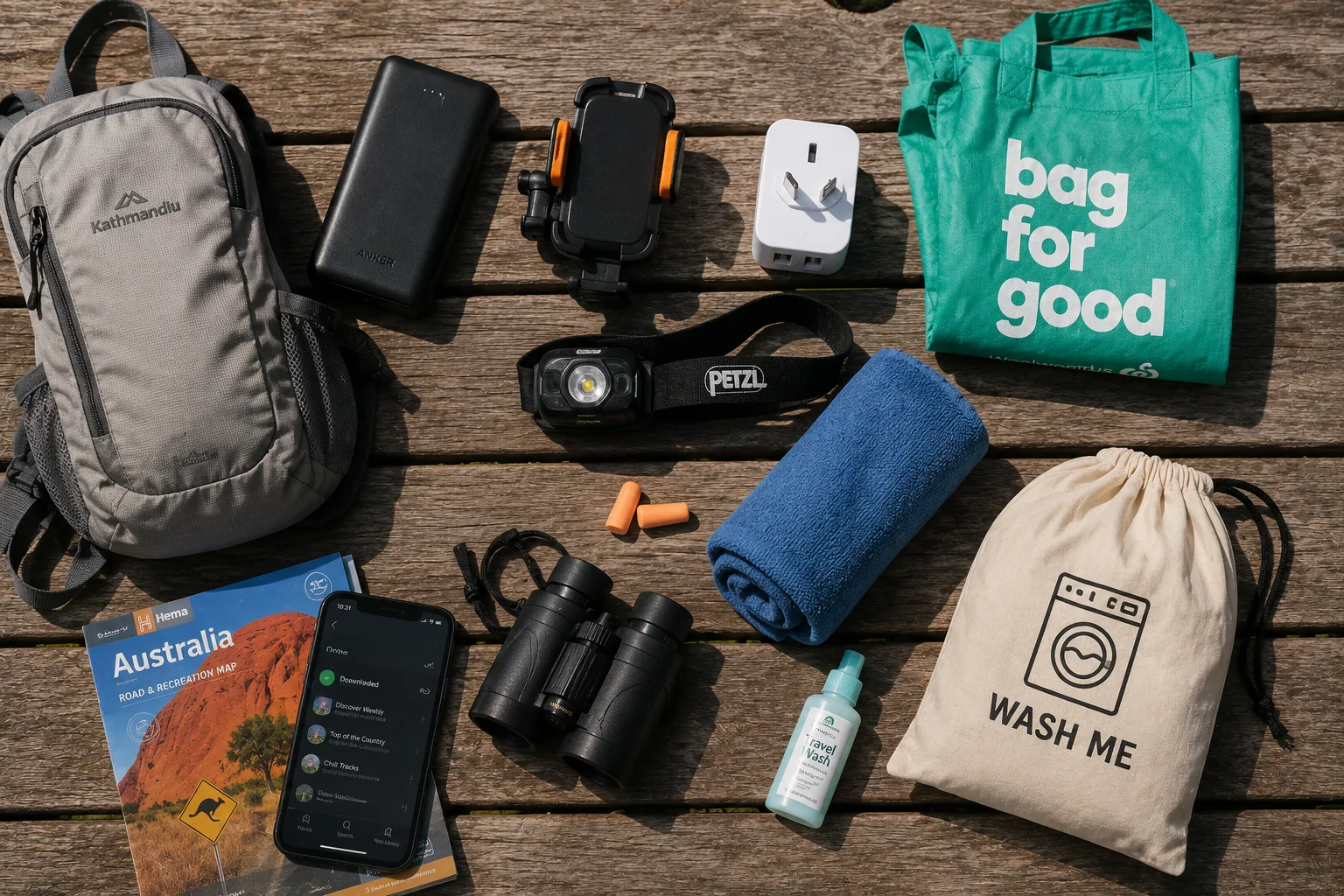
Most Campervans include the essential cooking and sleeping equipment. However, these extras are often handy:
- small backpack for day trips
- power bank
- phone holder for navigation
- type I travel adapter
- reusable shopping bag
- headlamp or torch
- quick-dry towel
- laundry bag and small amount of detergent
- earplugs
- offline maps and downloaded music
- binoculars for wildlife
* Many of the above items can also be easily purchased at your destination. Check in advance what's included with your Campervan hire. This way you'll avoid bringing bedding, towels or camping equipment unnecessarily.
Walking and outdoor activities
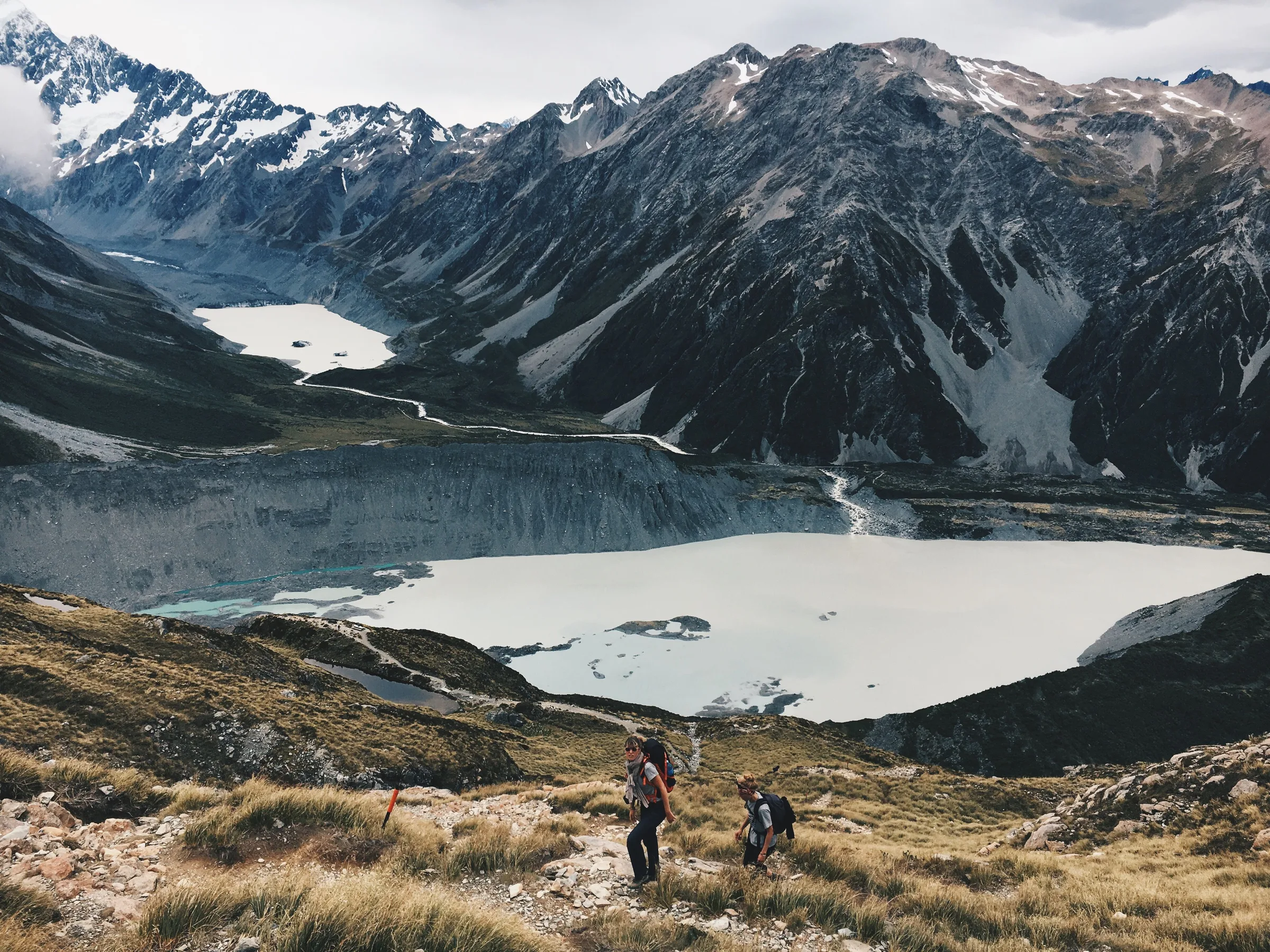
Planning to do a lot of hiking? Then bring sturdy, broken-in walking boots, sports clothing, a compact rain jacket and a day rucksack. Walking poles can be useful on steep or longer routes.
Clean your hiking boots and other used outdoor gear thoroughly before departure. Australia and New Zealand have strict regulations to protect their nature and agriculture against diseases and harmful organisms. Shoes, tents and camping equipment must be free from soil, mud, leaves and seeds.
Medication and personal care
Take sufficient medication for the entire trip, preferably in the original packaging. Keep important medication in your hand luggage and for prescribed medicines, consider bringing an English-language doctor's certificate.
A small travel first aid kit with painkillers, plasters, disinfectant and remedies for travel sickness or insect bites is also handy.
Be careful upon arrival
Please note: Australia and New Zealand have very strict biosecurity rules. Food, plants, animal products, wooden items and used outdoor equipment often need to be declared. New Zealand also requires every traveller to complete a Traveller Declaration before arrival.
Unsure whether something needs to be declared? Always declare it. Declaring doesn't automatically mean you have to surrender it, but failing to declare can result in a fine.
My advice
Also read
Hire a Campervan in Australia
Travelling around Australia in a Campervan is the freest way to travel and often more affordable than you might think.
Hire a Campervan in New Zealand
Want to hire a Campervan in New Zealand?
Visa for Australia
From free eVisitor to Working Holiday Visa: how to quickly arrange the right visa for your trip to Australia without unnecessary costs.
Ready for your own road trip?
Request a Campervan deal with no obligation. Response within 24 hours, advice is always free.